Jaipur, July 16,2026.
Every day, millions of Indians use digital platforms to access banking, healthcare, government services, education and countless other essential facilities. Yet for many persons with disabilities, senior citizens and individuals with limited digital literacy, these everyday conveniences often remain difficult to access without assistance.
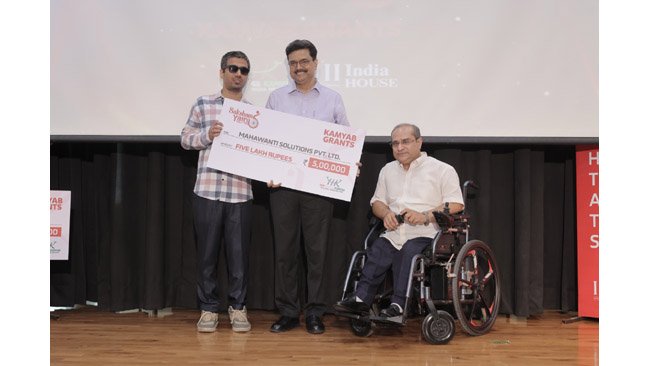
Recognising both the scale of this challenge and the potential for technology to bridge it, Kamyab Grants 2026 selected Jaipur-based startupThe Accessible Nation (TAN) as one of its four grant recipients, awarding the venture an equity-free grant of ₹5 lakh for its contribution towards building a more accessible and inclusive digital ecosystem.
The recognition follows a rigorous national selection process that attracted more than 300 applications from innovators representing 25 states and over 100 cities. After multiple rounds of screening, founder interactions, business evaluations and pitching sessions, TAN emerged as one of the ventures that most strongly reflected the programme’s commitment to supporting innovations capable of creating meaningful social impact.
Founded by entrepreneur Sunil Chaudhary, The Accessible Nation is built around a simple yet significant idea: technology should empower people, not exclude them.
While India’s digital transformation has accelerated access to services across sectors, accessibility continues to remain a critical gap. Many digital platforms are still not designed with the needs of persons with disabilities or elderly users in mind. Tasks that most people complete within minutes, such as navigating an application, accessing information or completing online transactions, can become frustrating and, at times, impossible without external support.
The Accessible Nation seeks to address this challenge through an accessibility-first platform that combines inclusive design, intuitive user experiences and assistive technologies to make digital services easier to access. Rather than viewing accessibility as an additional feature, the platform integrates it into the very foundation of its design, enabling greater independence and participation for users who are often overlooked in conventional product development.
For the Kamyab Grants selection panel, it was this approach that distinguished TAN from hundreds of other applications.
The programme evaluates ventures not only on innovation but also on their ability to solve real-world problems, scale sustainably and create measurable impact. TAN demonstrated a clear understanding of an underserved challenge while presenting a practical solution with the potential to improve everyday lives across diverse communities.
Its selection also reflects the changing priorities of India’s innovation ecosystem. Increasingly, entrepreneurs are moving beyond purely commercial opportunities to develop solutions that address accessibility, inclusion and quality of life. Such innovations not only create businesses but also contribute to building a more equitable society.
Commenting on the selection, entrepreneur and investor Ajay Gupta, who leads Kamyab Grants under the Hum HongeKamyab Foundation, said that the future of innovation must be measured by its ability to solve meaningful human problems.
“True innovation is not defined by how advanced a technology is, but by how many lives it is able to improve. The Accessible Nation stood out because it addresses an everyday challenge faced by millions of people with dignity, empathy and scalability. We believe solutions like these have the potential to transform accessibility from an afterthought into a fundamental design principle across India’s digital ecosystem,” he said.
Beyond financial support, TAN will receive mentorship from experienced entrepreneurs, access to industry experts, visibility support and opportunities to collaborate with a network of more than 1,300 schools and universities associated with the Kamyab Grants ecosystem. The objective is to help promising ventures strengthen their products, expand their reach and accelerate their long-term impact.
The recognition of The Accessible Nation represents more than the success of a single startup. It signals the growing importance of accessibility as a national development priority and highlights the role entrepreneurs can play in ensuring that technological progress benefits every section of society.
As India continues its journey towards becoming one of the world’s leading digital economies, initiatives such as Kamyab Grants are encouraging innovators to build solutions that combine technological excellence with social responsibility. By supporting ventures like The Accessible Nation, the programme reinforces an important idea: innovation is at its most powerful when it creates opportunities for those who have historically been left behind